
Low-consumption office buildings with infrequent water use could have chemical and microbiological safety issues, according to a study published in PLOS Water by Andrew Whelton at Purdue University, Indiana, United States, and colleagues. The research could have implications for office buildings used less frequently during pandemic lockdowns, and suggests that regular water testing in commercial buildings may be needed.


The human body comprises around 60% water.
It’s commonly recommended that you drink eight 8-ounce (237-mL) glasses of water per day (the 8×8 rule).
Although there’s little science behind this specific rule, staying hydrated is important.
Here are 7 evidence-based health benefits of drinking plenty of water.
1. Helps maximize physical performance
If you don’t stay hydrated, your physical performance can suffer.
This is particularly important during intense exercise or high heat.

High levels of ingested microplastics in the human body have the potential to have harmful effects, a new study reveals.
The research - the first of its kind to quantify the levels of microplastics which may lead to harmful effects in human cells - has been led by researchers at the Hull York Medical School and the University of Hull.

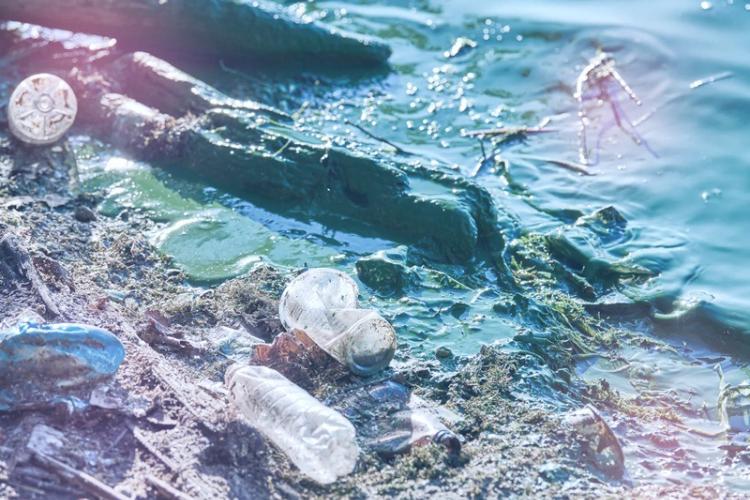
Water pollution occurs when a body of water becomes contaminated, usually by chemicals or microorganisms. Water pollution can cause water to become toxic to humans and the environment.
Water is an essential resource for all life on Earth. If a water source becomes contaminated due to pollution, it can lead to health issues in humans, such as cancer or cardiovascular conditions.
This article explores the causes of water pollution, how it can affect human health, and what people can do to help prevent it.
Data published for first time by Environment Agency shows 27% increase on previous year.
Water companies discharged raw sewage into rivers and coastal waters in England more than 400,000 times last year, Environment Agency (EA) data has revealed.
Untreated human effluent poured into rivers and seas for a total of 3.1m hours via storm overflow pipes that are supposed to be used only in extreme weather to relieve pressure in the sewage system.

A nine-month investigation by the Guardian and Consumer Reports found alarming levels of forever chemicals, arsenic and lead in samples taken across the US by Ryan Felton and Lisa Gill of Consumer Reports and Lewis Kendall for the Guardian

A cleanup of the Xuyen Tam Canal in Saigon proposed 20 years ago never took place, and an unbearable stench assails the thousands of people living around it.
One day in 2001 Nguyen Thanh Duc saw a group of local officials come to his alley. With writing pads and measurement tapes in hand, they walked back and forth, pointing at things and writing stuff down before leaving.

The government has green-lighted a VND2-trillion ($86.35 million) project to supply water to three provinces in the Mekong Delta.
Long An, Tien Giang and Ben Tre provinces will get 300,000 cubic meters of water daily when the project is completed this year, and double that from 2025 onwards.
Water will be drawn from the Tien River, a distributary of the Mekong River, to a pumping station in Cai Be District in Tien Giang, and distributed to the other two provinces through pipelines.

Nanoparticles found in foetal brains and hearts, but impact on human health is as yet unknown
Tiny plastic particles in the lungs of pregnant rats pass rapidly into the hearts, brains and other organs of their foetuses, research shows. It is the first study in a live mammal to show that the placenta does not block such particles.

New technique expected to enable scientists to find accumulated microplastics in humans
Microplastic and nanoplastic particles are now discoverable in human organs thanks to a new technique.
Microplastics have polluted the entire planet, from Arctic snow and Alpine soils to the deepest oceans. People are also known to consume them via food and water, and to breathe them in, but the potential impact on human health is not yet known.