

Vietnam's biggest plastic waste culprit: Take-away food packaging
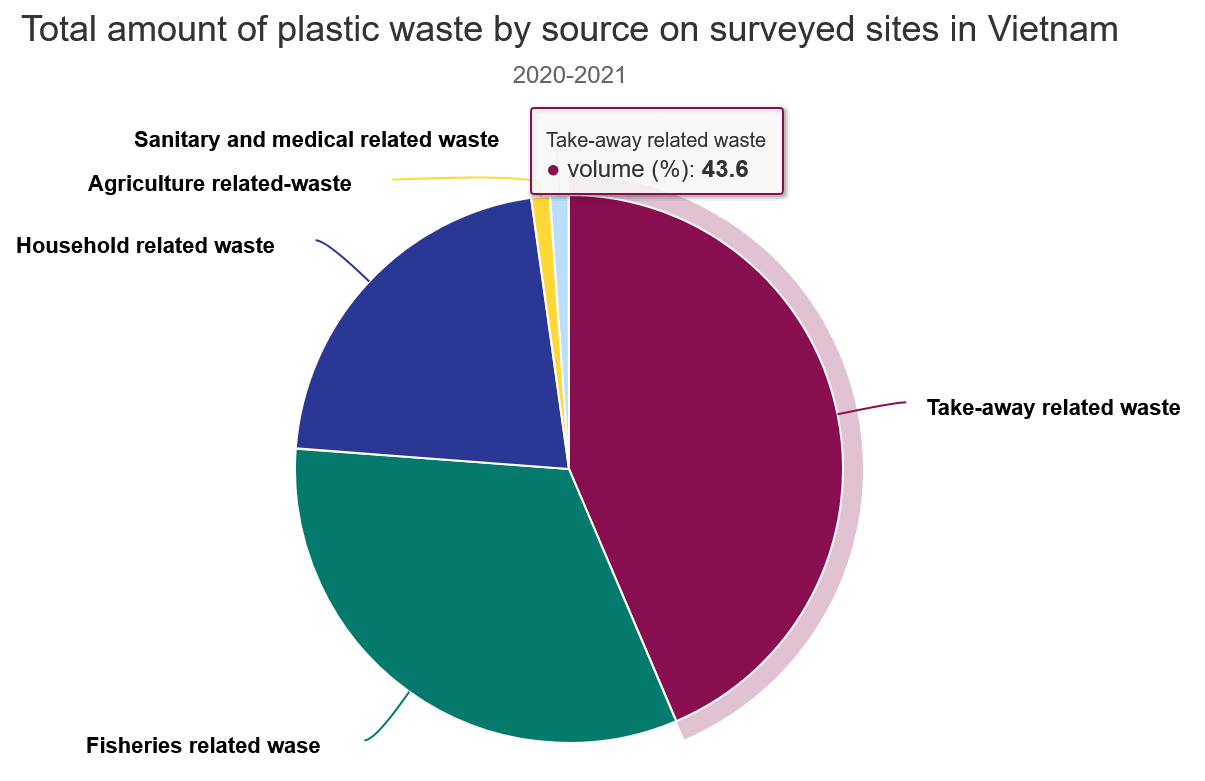
According to the World Bank, 44 percent of plastic waste at surveyed sites is made up of take-away food and drinks.
The World Bank released a report this week that shows that the take-away related waste accounted for 43.6 percent in number and 35.1 percent in weight of the total plastic waste, followed by fisheries-related waste (32.6 percent in number and 30.6 percent in weight), and household-related waste (21.6 percent in number and 22.8 percent in weight).
According to a report conducted from July 2020 to April 2021, agricultural and medical-related plastics made up only about 1 percent of the total number and weight of plastic waste in Vietnam. These types of plastics are often leaked into rivers and ocean, where they can harm both wildlife and humans. While there are potential market alternatives for these types of plastics, more research is needed in order to identify them fully.
The waste amount was surveyed in 24 river sites and 14 coastal sites, in 10 different cities and provinces: Lao Cai and Hai Phong in the north, Thua Thien Hue, Da Nang, Quang Nam, Khanh Hoa in the central region, and Ho Chi Minh City, Can Tho, Kien Giang and Soc Trang in the south. In each surveyed location, three to four survey sites were selected, spread out over both coastal and river areas. Each site was at least 100 meters long in parallel with the water. Teams of two or three people conducted surveys at each site, along with local volunteers who helped with the data collection.
"Much greater effort is required to educate Vietnam's population about waste reduction, reuse, and halting littering, in order to reduce the demand for low-utility plastic, support more cost-effective waste management infrastructure, and reduce littering that ends up in rivers and the ocean,"
The majority of plastic waste was found at riverbanks and coastal sites, where it accounted for 72% and 52% of the total waste respectively. Plastic bags and their fragments were the most common single-use items in both locations. Styrofoam food containers were also among the top five items in both locations. However, it is suggested that efforts to address plastic pollution caused by single-use items should not be based on replacing those items with non-plastic single-use items, or plastic multi-use items, because they both may have negative impacts. When promoting alternative products, the emphasis should be on promoting reusable items and minimizing the use of plastic, to better align with Vietnam's goal of a more circular economy
That's according to data released last year by the Ministry of Natural Resources and Environment, which shows that plastic waste accounts for 7 percent of the solid waste discharged every day in Vietnam. That's nearly 2,500 tons a day.
Source: VNExpress
- Log in to post comments